How NAFTA Impacts Trade with Mexico

Signed into law in 1994, the North American Free Trade Agreement (NAFTA) transformed economic relations among the United States, Mexico, and Canada. The revolutionary deal aimed to bolster international trade by reducing or removing trade barriers like tariffs and import quotas. Although replaced by the United States-Mexico-Canada Agreement (USMCA) in 2020, NAFTA’s legacy and influence on trade relations with Mexico cannot be understated, especially for business owners seeking opportunities in international commerce.

The immediate impact of NAFTA was the removal of all tariffs on qualifying goods traded between the United States and Mexico. This action leveled the playing field for American producers, empowered by the ability to compete on more advantageous terms in the Mexican market. For entrepreneurs running import or export services or those engaged in buying and selling goods between these two nations, this had a significant influence on their operations and potential opportunities.

Consider, for instance, the automotive industry. Before NAFTA, tariffs on automobiles and auto parts were substantially high. The agreement, however, eliminated these tariffs, incentivizing both countries to enhance their automotive trade, boosting competitiveness in the industry, and fostering significant cost savings for manufacturers. This environment of reduced costs and increased competition often results in lower prices for consumers, creating a win-win situation for all parties.

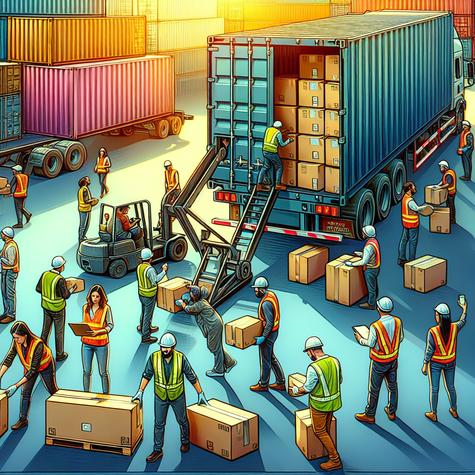
The removal of tariffs and barriers also encouraged cross-border supply chains. Manufacturers often segmented their production processes across both countries to exploit each region’s comparative advantage. For instance, high-tech components are typically manufactured in the US, sent to Mexico for assembly, and returned to the U.S. as finished goods. This system enabled businesses to optimize their resources and meet customer demands efficiently. Such developments, whether in the manufacturing, agricultural, or service sector, provided businesses with varied, lucrative opportunities in the Mexico-US trade landscape.

NAFTA also commercialized the agricultural sector. Before the agreement, Mexican policy protected its farmers and subsidized corn and bean production. NAFTA dismantled this policy, allowing American farmers to export their goods more freely. Mexico’s consumer market benefited from access to a broader range of quality agricultural products, and American farmers enjoyed increased sales.

However, it’s crucial to look at some of NAFTA’s drawbacks to paint a complete picture of its impacts. The agreement faced criticism for accelerating job outsourcing to Mexico, where labor was significantly cheaper. This issue resonated with manufacturing workers in the U.S., facing job losses due to the shift in production to Mexico. Additionally, while the U.S. agricultural sector benefited immensely from the agreement, it simultaneously disadvantaged Mexican farmers who could not compete with the influx of American products.

The Intellectual Property Rights (IPR) protections under NAFTA was another significant feature that impacted trade. The agreement mandated strict rules for patent, copyright, and trademark protection. The enhanced level of IPR protections was aimed at stimulating innovation and creative endeavors across all sectors. Business owners who initially feared copying or forgery, found it more secure to do business in the region, thus promoting trade.

NAFTA also accounted for areas beyond conventional notions of trade. It contained provisions aimed at protecting the environment and ensuring basic labor standards. By including these standards, the agreement attempted to ensure trade expansion would not compromise workers’ rights or the environment.

In essence, while NAFTA faced certain criticisms, it arguably revolutionized trade between Mexico and the United States, providing businesses with countless avenues of exploration and development. However, it is crucial for business owners to understand that NAFTA was replaced by the USMCA in 2020.

The USMCA maintains the spirit of NAFTA but introduces several updates. Like its predecessor, the USMCA’s main purpose is to promote open, fair, and robust trade between the three countries. It introduces innovations like digital trade provisions and stronger labor protections, offering a modernized framework within which the U.S.-Mexico trade can thrive.

Regardless, understanding NAFTA’s history and impact on trade relations with Mexico provides valuable insight into the dynamics of doing business in Mexico today. It assists business owners in understanding the progress achieved and challenges faced in the realm of international trade. Thorough comprehension of these factors will enable businesses to make informed decisions and reap the rewards of cross-border trade effectively.
How to Utilize the Mexico Trade Commission Services

Doing business with Mexico requires services that are designed to consolidate Mexico’s export capacity and facilitate its access to international markets. With 38 offices strategically located around the world, ten of which are in the United States, the Trade Commission of Mexico offices act as a promotional arm on behalf of Mexican exporters and as a liaison for foreign investors interested in pursuing opportunities in Mexico.

In order to prioritize and make our services more efficient, they have set up two ways of channeling information:

¨ The Foreign Investment Assistance Program (known as FIAP) was established to assist companies and individuals interested in forming strategic alliances, joint ventures, mergers or to directly invest in Mexico

¨ The Trade Opportunities Program (known as TOP) was established to assist companies in importing products from Mexico or in representing Mexican companies in the U.S.

The Trade Commission of Mexico offices network headquarted in Mexico City with 41 regional offices scattered throughout Mexico’s most important trade and investment markets. Founded in 1937, the Bank is a federal financial institution in charge of extending credits, guarantees and promotional services, in support of investment opportunities in Mexico and its foreign trade.

Services provided by the bank include extending export and import credits for non-oil goods and services, providing comprehensive financing to increase the country’s range of goods available for export, and establishing guarantees to protect against non-payment risks in foreign trade.

Such services are designed to meet the needs of public and private sector enterprises, marketing firms and companies involved in manufacturing and marketing value-added goods and services in general, ranging from agricultural commodities to electronic products, automobile parts and services in fields such as tourism, engineering and construction.

Most of the Bank’s transactions are carried out through the existing banking infrastructure, the main sources of funding being its own capital, foreign credit and funds stemming from its operations.

BANCOMEXT also offers promotion, information, training and advisory services in the financial, commercial and legal fields, in order to facilitate business transactions and foreign investment. Such activities are undertaken in close cooperation with the agents involved in Mexico’s efforts to develop foreign trade.

Mexico’s modernization and liberalization process has given rise to attractive trade and investment opportunities. Trade liberalization, non-oil exports and the promotion of foreign investment are the cornerstone of the outward-oriented strategy now being followed, the result of which has been improved access to an efficient use of funds.

The range of exportable goods are continuously being evaluated.  They identify companies that are entering the export field for the first time and those with the potential to efficiently meet foreign demands.The latest information systems receive data on international bids for infrastructure projects and the construction of industrial plants and oil-drilling platforms in various countries, and relay such information to companies, chambers of commerce and trade associations.

Specialized courses are available for companies, chambers of commerce, trade associations, and full-service banking institutions at the Technical Training Institute for Foreign Trade Development (Instituto de Formación Técnica para el Desarrollo del Comercio Exterior). These courses are organized both within Mexico and abroad, such as seminars and lectures. Topics of special interest include “How to Export from Mexico”, “Foreign Investment in Mexico”, and “Setting Up In-Bond Industries in Mexico”.

Texas and It’s Trade with Mexico

Trade between US and Mexico

Over US$248 billion dollars worth of trade between the U.S. and Mexico were reported for 2000, as expected.

Mexico is the second largest trading partner for the United States as an importer and exporter.  This impending jump in trade rank for Mexico is the latest example of NAFTA’s remarkable contribution to Mexico-U.S. trade.

Texas Exports to Mexico

Texas total exports to Mexico in 2000 were estimated at  US$57.1 billion, accounting for 47% of the state’s total exports.  Mexican exports to Texas for the same period were estimated at US$45 billion, one third of Mexican total exports to the U.S.  Mexico continues to be the state’s most important customer. Texas is the largest U.S. state in exports to Mexico.                Export estimates from Texas to Mexico for 2001 were expected to reach US$57 billion, and Mexican exports to Texas for the same period were expected to be US$49 billion, again representing one third of Mexican total exports to the U.S..

MAQUILADORA AND PITEX PROGRAMS

These programs have evolved from the original in-bond concept to encompass a broad package of export promotion incentives and to comply with international agreements.  PITEX allows temporary production of goods for export by companies that comply with all of the Mexican taxation laws.   PITEX supports export-oriented industry through duty exemptions for imports used to create exported products.  Goods can also be shifted to the local market by paying duties and taxes as in the maquiladora program.  Mexico extends similar benefits under related export promotion programs known as ALTEX and ECEX.  As a footnote, it is important to remember that all raw materials originating from any of the three NAFTA countries pay no duties.  But all raw materials originating from any other country, will pay a differential from the country that comes in, to the country that goes out.

Related sites in both English and Spanish

  1. http://www.gob.mx/promexico
  2. http://www.bancomext.com/en/