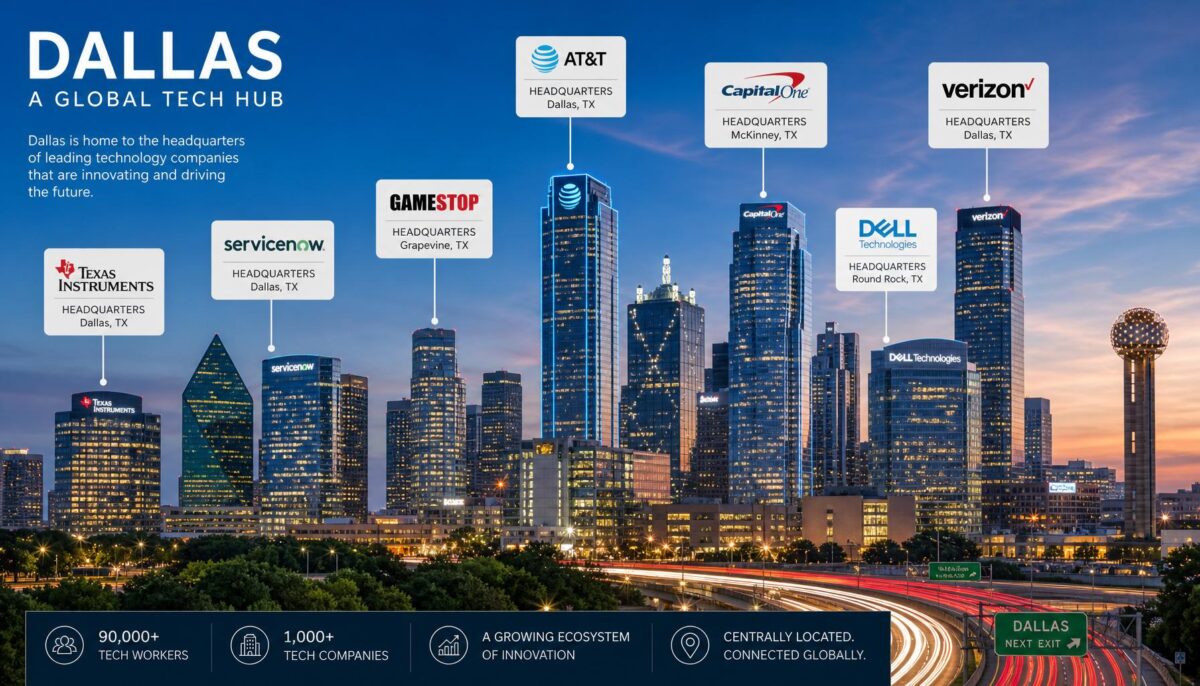
Dallas, once known primarily for its dominance in the oil and gas, real estate, and telecommunications sectors, has evolved into a thriving tech hub over the past two decades. The city has seen consistent growth in its tech industry, combining a rich tech talent pool, a lower cost of living compared to other tech hubs, a welcoming business environment, strategic location, and a proactive approach towards technological advancement.
The evolution of Dallas as a leading tech hub can be attributed to several factors. Employment in the tech industry in the Dallas-Fort Worth area has risen dramatically, with tech companies like Texas Instruments and AT&T having a significant presence there. The area has also seen an influx of tech startups, with Dallas being ranked as one of the top cities for tech startup growth.
Another important factor that has contributed to the rise of Dallas as a tech hub is access to talent. Dallas is home to several universities that produce a high number of STEM graduates. The University of Texas at Dallas notably has one of the top computer science programs in the U.S., providing a steady stream of tech talent to the city’s growing tech industry.
The Dallas tech boom has had a significant impact on the local economy. It has created a plethora of high-paying jobs, attracting tech professionals from all over the country. Besides, it has stimulated economic activity in other industries like real estate, retail, and food services as more money is spent locally.
In terms of the real estate market, the tech boom has influenced both commercial and residential real estate. On the commercial side, the demand for office space by tech companies has been robust. For instance, Uber announced plans to open a large office in Dallas, with thousands of employees. On the residential side, the influx of high-paying tech jobs has increased demand for housing, pushing home prices higher. This trend has been more pronounced in neighborhoods close to tech companies.
However, the growth in the tech industry also poses challenges likely to influence policy-making in coming years. Affordable housing could become a significant issue if the trend of rising home prices continues. In addition, ensuring that the benefits of the tech boom are broadly shared and do not result in increased income inequality might also need to be addressed.
Overall, the evolution of Dallas as a leading tech hub is a significant boost for the city’s economy. It presents opportunities and challenges, both of which need to be skillfully managed to ensure sustainable development. With its diverse economy, rich talent pool, and favorable business environment, Dallas is well-positioned to continue to thrive as a leading tech hub.